'He Did Everything Right. And Yet That Wasn't Enough.'
Jack was wearing a helmet and full cycling gear. He was visible and alert. Investigations later found that the lorry had a poorly adjusted mirror, leaving the side that struck him covered by a single, smaller wing mirror. A significant blind spot! A heavy vehicle! A left-hand turn!
Will Cornwell, the solicitor who secured a civil settlement for the Bruce family, was unequivocal: the family believe it was a 'preventable death' — and he agrees. Those two words should stop every fleet manager, every local authority, every refuse contractor cold.
The Technology Already Exists
This isn't a story about future possibilities. The proximity detection and alert technology that could have changed that morning in Swanley exists right now — and has done for some time.
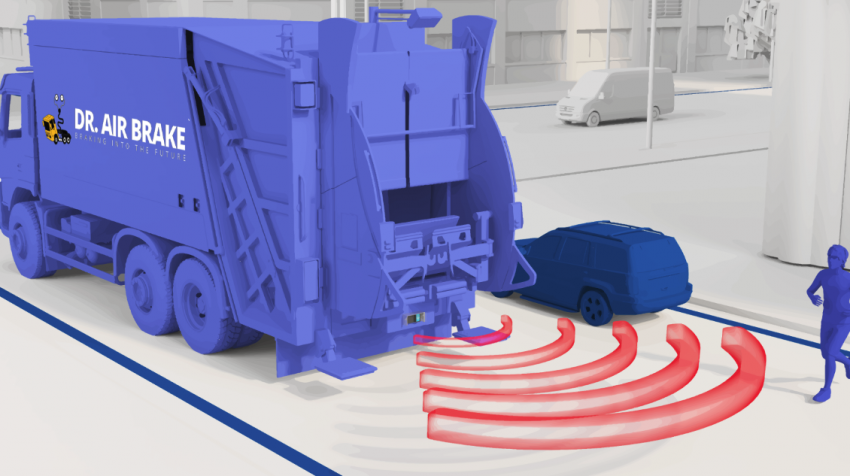
Doctor Air Brake's proximity radar sensors are built for exactly this kind of scenario. Large commercial vehicles working in urban streets generate blind spots that mirrors alone cannot eliminate. The radar sensors continuously monitor the vehicle's surroundings and alert drivers to hazards before they become collisions.
For reversing and manoeuvring in tight spaces — the specific conditions that killed Jack — Doctor Air Brake's ReverseSmart system adds another layer. Real-time awareness of what is behind the vehicle, removing the guesswork that costs lives.
Yvonne Bruce called for strict training guidelines for drivers of heavy vehicles. She's absolutely right to demand that. But training has a ceiling. A driver can have a bad day, miss a check, be distracted for a second. Technology doesn't.
Cameras Record. Sensors Prevent.
Sevenoaks District Council said it "continues to prioritise public safety" and fits high-definition cameras to its vehicles. Cameras matter — but they document what happened. They don't stop it happening.
Active proximity alerting is available, proven and deployable across any fleet. For refuse vehicles working daily routes through residential streets — alongside cyclists, children, dog walkers — it shouldn't be a nice-to-have. It should be compulsory.
So Why Isn't It?
That's the question the HSE, the DVSA, and the Department for Transport need to answer.
The HSE has a duty to ensure that workplaces — and refuse vehicles operating on public streets are workplaces — do not expose people to foreseeable risks. The DVSA sets the standards for what commercial vehicles must carry to be roadworthy. The DfT shapes the policy framework that local authorities and contractors operate within. Between them, they have every lever needed to make proximity radar sensor technology a legal requirement on large vehicles in urban environments.
They have not pulled those levers…
Instead, we see the same pattern repeat. An incident. An inquest. A verdict of accidental death. A family left to pursue civil action while the system records the outcome and moves on. Guidance is issued. Best practice is encouraged. And the next refuse lorry pulls out of the depot with the same blind spots as the one before it.
Jack Bruce's death is not an isolated tragedy. Cyclists and pedestrians are killed by large commercial vehicles in this country with a regularity that should shame everyone responsible for setting the standards. The technology to reduce those deaths significantly is sitting on a shelf, available to any fleet operator who chooses to fit it. The fact that choice remains optional is a regulatory failure.
Yvonne Bruce is fighting for safer roads. She shouldn't have to fight alone — and she shouldn't have to fight the institutions whose entire purpose is to prevent exactly this.
Jack's Legacy Deserves More Than Condolences
The commercial vehicle sector doesn't need to wait for the next inquest, the next settlement, the next family changed forever on an ordinary street. If you operate large vehicles and proximity sensor technology isn't fitted, one question is worth sitting with: if the worst happened tomorrow, could you honestly say you'd done everything possible to prevent it?
Doctor Air Brake can help you answer that question — before it needs to be asked.
To find out more about proximity detection and ReverseSmart systems for commercial vehicle fleets.
T: 01785 714447